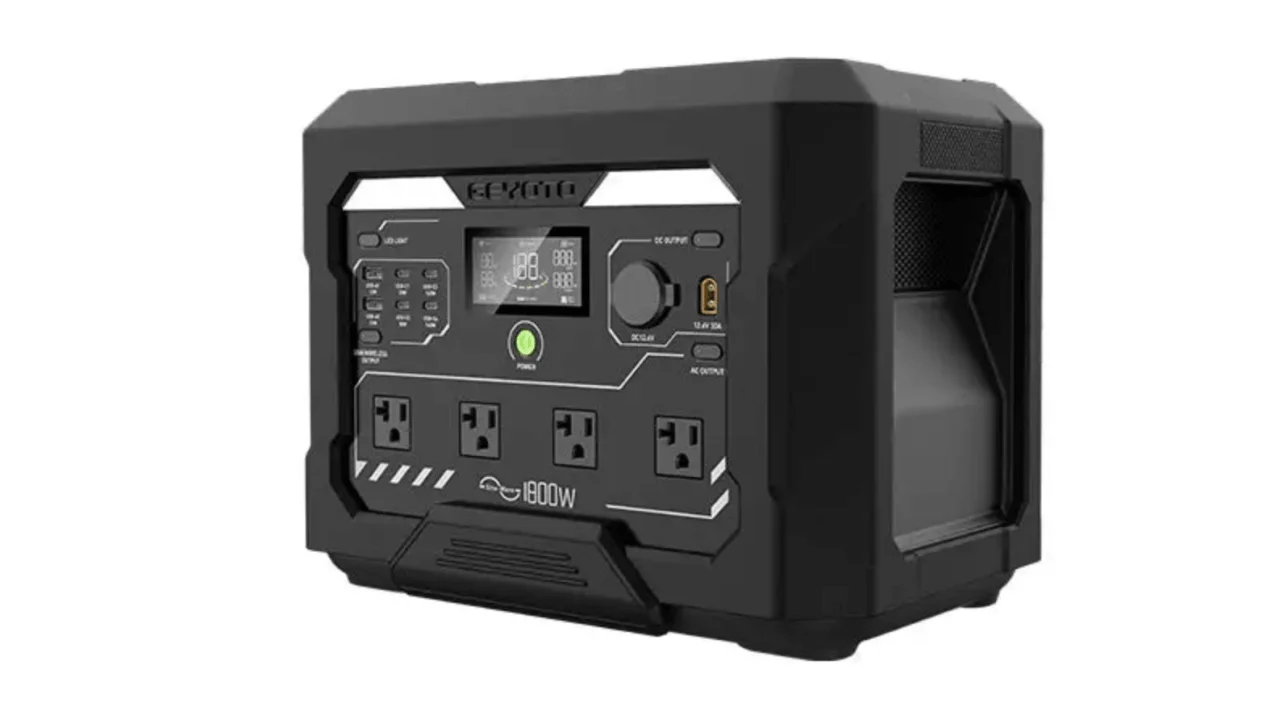

A solar generator can provide dependable electricity when the grid goes down, during outdoor adventures, or while traveling to places without convenient access to outlets. Among the many options available today, fast-charging models are attracting attention because they can replenish their batteries much more quickly than traditional portable power stations. However, charging speed is only one factor to consider. Battery capacity, solar input, inverter output, portability, safety features, and long-term durability can all affect whether a particular model is a worthwhile investment.
This fast-charging solar generator review explains the most important features to evaluate before buying one. Understanding how these systems work and what specifications actually mean can help you choose a generator that matches your power requirements rather than simply selecting the model with the fastest advertised charging time.
What Is a Fast-Charging Solar Generator?
A solar generator is essentially a rechargeable battery system combined with power electronics that allow you to operate electrical devices without connecting directly to the utility grid. Most modern systems can be charged from several sources, including wall outlets, solar panels, and sometimes a vehicle.
A fast-charging solar generator is designed to accept higher charging power, allowing its internal battery to reach full capacity in less time. Some models can charge rapidly from AC power while also accepting substantial solar input. This can be especially useful during emergencies because you can restore the battery quickly when sunlight is available or when grid power temporarily returns.
Fast charging does not necessarily mean better overall performance, though. A generator that charges quickly but has limited battery capacity or insufficient output may not meet your needs.
Why Charging Speed Matters
Charging speed becomes particularly valuable during unpredictable power interruptions. If your electricity goes out for several hours, a generator that can recharge quickly can be ready for another outage sooner.
For example, suppose a portable power station supports a high AC charging rate. Instead of requiring most of a day to recharge, it may replenish its battery within a few hours or less, depending on its capacity and charging settings.
Solar charging speed is equally important if you plan to rely primarily on renewable energy. A larger solar input rating allows the generator to capture more energy when conditions are favorable. However, actual solar charging performance depends on panel wattage, sunlight intensity, panel orientation, temperature, and the generator’s maximum solar input.
Battery Capacity and Usable Energy
Battery capacity is one of the first specifications to examine. It is commonly expressed in watt-hours (Wh). A higher Wh rating generally means the generator can store more energy.
For example, a 1,000Wh unit theoretically stores more energy than a 500Wh unit. However, you should not assume that every watt-hour will be available to your appliances because conversion losses and battery-management limitations affect usable capacity.
Think about what you actually want to power. A small refrigerator, lights, phones, Wi-Fi equipment, laptops, and other essential electronics may require significantly more energy than charging a smartphone or running a few LED lights.
Making a list of your essential devices and estimating their wattage can help determine the appropriate battery size.
Inverter Output Is Equally Important
Battery capacity tells you how much energy the system can store, while inverter output determines what devices it can operate.
Check both continuous output and surge capacity. Some appliances, particularly refrigerators, pumps, and power tools, can briefly require considerably more power when their motors start.
A generator with a 1,000W continuous inverter may not be suitable for an appliance that requires a higher startup surge. Before buying, compare your appliances’ running and starting wattage with the generator’s specifications.
Pure sine wave output is also an important feature. It generally provides cleaner AC electricity and is suitable for a wider range of sensitive electronics.
Understanding Solar Charging Performance
One of the biggest mistakes buyers make is assuming that a generator’s maximum solar input will always be achieved. Real-world solar charging is affected by weather and installation conditions.
A panel rated at a particular wattage will not necessarily produce that amount continuously. Clouds, shade, panel angle, dust, heat, and seasonal sunlight can all reduce production.
When reviewing a solar generator, check its maximum solar input, supported voltage range, and whether compatible panels are included. If you plan to expand the system later, make sure the charge controller can handle the additional solar capacity.
A high solar-input limit can be valuable because it allows the battery to recharge faster under strong sunlight.
Battery Chemistry and Lifespan
Battery chemistry has a major impact on durability. Lithium iron phosphate, commonly called LiFePO4, has become popular in portable power stations because it can provide a long cycle life and strong thermal stability.
Other lithium battery chemistries may offer advantages in energy density or weight. The best choice depends on your priorities, including portability, expected usage frequency, lifespan, and purchase price.
If you expect to use your generator frequently rather than keeping it strictly for emergencies, pay close attention to the manufacturer’s stated cycle-life rating and warranty.
Portability and Physical Design
A powerful generator can be less useful if it is too heavy or awkward to move. Consider where you will store it and how often you expect to transport it.
For camping and road trips, handles, wheels, compact dimensions, and manageable weight can make a significant difference. For home backup, weight may matter less than capacity and output.
Look for a design that provides easy access to AC outlets, USB ports, DC outputs, and charging connections. A clear display showing battery percentage, input power, output power, and estimated runtime can also make operation much easier.
Safety Features to Look For
A quality solar generator should include multiple protective systems. Common features include overcharge protection, over-discharge protection, short-circuit protection, over-temperature monitoring, and overload protection.
A built-in battery management system can monitor individual battery conditions and help maintain safe operation.
It is also important to follow the manufacturer’s instructions for charging, storage, ventilation, and temperature limits. Never modify the electrical system or use incompatible accessories simply to increase charging speed.
Connectivity and Smart Features
Many newer power stations include mobile apps and wireless connectivity. These features can allow users to monitor battery levels, adjust charging settings, check power consumption, and receive status information remotely.
Smart features are not essential for everyone, but they can be convenient during emergencies. If a generator is stored somewhere inconvenient, remote monitoring can help you check its status without physically inspecting the unit.
However, basic controls should still be available directly on the generator in case an app or wireless connection is unavailable.
Noise Level and Emergency Use
Unlike conventional fuel-powered generators, battery-based solar generators operate quietly. This makes them attractive for indoor emergency applications when used according to the manufacturer’s safety instructions.
Low noise can be especially useful at night when powering communication equipment, medical-support electronics, lighting, or household appliances. It also makes portable power stations more comfortable for camping and outdoor recreation.
Nevertheless, some models include cooling fans that become audible under heavy loads or during rapid charging. Checking the manufacturer’s noise information and independent testing can provide a better idea of real-world operation.
Price Versus Long-Term Value
The cheapest solar generator is not always the best value. Instead of comparing prices alone, consider battery capacity, inverter performance, charging speed, cycle life, warranty coverage, included accessories, and expansion options.
A higher-priced model may be worthwhile if it offers a larger battery, faster charging, stronger inverter, better battery chemistry, and longer expected service life.
On the other hand, buying an oversized system can unnecessarily increase your costs if your actual electricity needs are modest.
What to Check Before Buying
Before making a final decision, create a simple checklist. Confirm the battery capacity, continuous inverter output, surge rating, AC charging speed, solar input limit, battery chemistry, cycle life, warranty, weight, dimensions, and available ports.
Also determine whether solar panels are included or must be purchased separately. Check connector compatibility and make sure the generator can accept the solar configuration you intend to use.
A practical fast-charging solar generator review should therefore look beyond the headline charging time. The fastest charging system is useful only when the battery, inverter, solar input, and overall design are appropriate for your specific needs.
Final Considerations
Fast-charging solar generators can be valuable tools for emergency preparedness, camping, travel, and everyday backup power. Their ability to recharge quickly can reduce downtime and make stored battery energy more convenient to manage.
Before buying, focus on the complete system rather than a single specification. Match battery capacity to your energy requirements, verify inverter output against your appliances, evaluate solar charging capabilities, and consider battery lifespan and safety features.
By taking this broader approach, you can select a solar generator that delivers practical performance and dependable energy when you need it most.